 Hi, I'm Palipilino!



PlayStation 2
1/25/2025
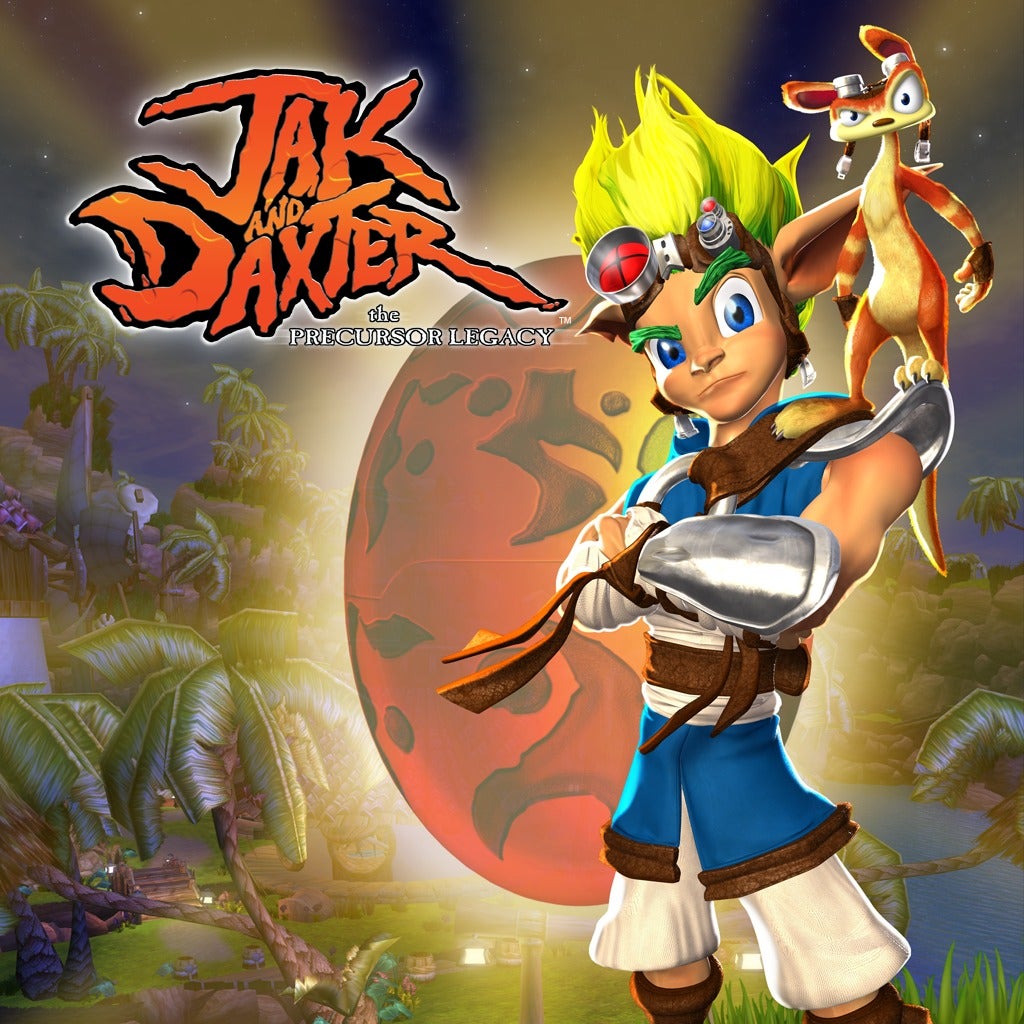
With video game development costs continuously on the rise, Naughty Dog—the team behind the popular Crash Bandicoot trilogy—would find themselves acquired by Sony, acting as a first-party developer for the recently released PlayStation 2. But with new hardware came new opportunities, and the team decided against continuing the Crash series on the PS2, instead choosing to create a new franchise for their debut as a Sony-owned studio. That franchise would go on to become Jak & Daxter, with its first entry (subtitled The Precursor Legacy) releasing in 2001.
And just as they did with Crash on the PS1, Naughty Dog would find another de facto console mascot in the eponymous duo. Jak & Daxter would go on to form one pillar of the unofficial PS2 mascot trifecta, with the others being Sly Cooper and Ratchet & Clank; its debut would become the best-selling game of the three aforementioned series, shipping over four million copies. And while Jak & Daxter retains some design features and aesthetic similarities from Naughty Dog's previous trilogy, its debut title fails to match some of Crash's quality.
This being their first title on Sony's new hardware, Naughty Dog placed a great degree of emphasis on graphical fidelity and the feeling of an interconnected world. And while Jak & Daxter might boast a smaller actual map size than some of its contemporaries, it uses what it has with great aplomb; there are no loading screens in this game, and players that wished to could trek from Sentinel Beach to Snowy Mountain without encountering a single interruption. This was incredibly novel for platforming games at the time, and it meant that almost all your time in Jak & Daxter is spent actually playing the game, as opposed to waiting to play it.
| Played For | 8h 57m |
|---|---|
| Completion Type | All 101 Power Cells |
| Favorite Area | Snowy Mountain |
| Fun Fact | This is the last time Jak wouldn't speak or carry a big gun! |
This also makes the game pretty enjoyable to just run around in, and its sandbox-like nature suits a younger or more inexperienced demographic perfectly. Nothing in Jak & Daxter is ever all too difficult either, which increases its prospects as a good introductory video game. Like Crash, it also maintains a primarily jungle-like setting with a relatively ambient soundtrack, but its impressive graphics for an early PS2 title and its open-world approach give it a lot of exploratory appeal that its marsupial cousin lacked.
However, even as Jak & Daxter strived for a more ambitious setting, its core gameplay hasn't evolved much from 1995. Outside of its impressive presentation, The Precursor Legacy functions as a relatively standard collectathon that offers pretty standard platformer action and not much beyond that. Most gameplay moments are serviceable enough, but what's missing from Jak & Daxter's first outing is a willingness to try something new. Its areas lack a certain individuality, making them feel not much more than pallet swaps when compared to each other. And outside of the levels that utilize the Zoomer—which represent a welcome change when they do appear—this game doesn't do much of anything to differentiate itself from the crowd from a gameplay sense.
Other games in the genre have performed well even when not bringing much new to the table, though, and that's usually a result of solid fundamentals or a loveable cast of characters. The Precursor Legacy doesn't quite nail either of these aspects.
It controls fine enough in most areas, but the double jump is pretty inconsistent. The camera controls are questionable, and it often gets stuck behind surfaces when trying to maneuver it. The game's final area also really kills the pacing, as it relies on a lot of timing-based platforming that is a drag to get through—especially when your double jump isn't functioning as it should. There's also a degree of plot here that's given far more time than it really deserves, so much so that the start of the game can almost feel disorientating. It doesn't help that Jak & Daxter pairs a silent protagonist with a stereotypically annoying sidekick—leaving Daxter with all the lines, without having anyone to bounce off of.
The series would go through a pretty significant change after The Precursor Legacy, with its two sequels playing more like third-person shooters rather than traditional platformers. The series would appropriately become a bit, well, edgier; one look at the progression of the trilogy's box art can attest to that. Jak & Daxter was certainly a success for the PS2, but perhaps this evolution can be attributed to the first game's timidness.
It's certainly a technical marvel, and even in a world where its achievements have been far overtaken, it's easy to appreciate Jak & Daxter for its innovation in world design, especially when compared to its contemporaries. But after less than a dozen hours, it can be pretty apparent that new ideas were probably needed to sustain a sequel. The legacy of The Precursor Legacy, then, is one of a relatively competent but generic platformer, a console debut for a newly acquired company, and a springboard for bigger (some may say better?) things.