 Hi, I'm Palipilino!



Xbox
4/19/2025
With the launch of the Xbox in North America on November 15th, 2001, it's fair to say that there were basically two types of games included in the debut console's launch lineup: there was Halo, and there was everything else. That's not to say that there wasn't quality in some of those other launch titles—it had Tony Hawk's Pro Skater 2X!. But Halo was the definitive front-runner in terms of marketability and driving console sales. Of the 22 games that were available on the same day as the system, five of them were Microsoft published, and together, they demonstrated the company's goal of appealing to as wide a market as possible reasonably well.
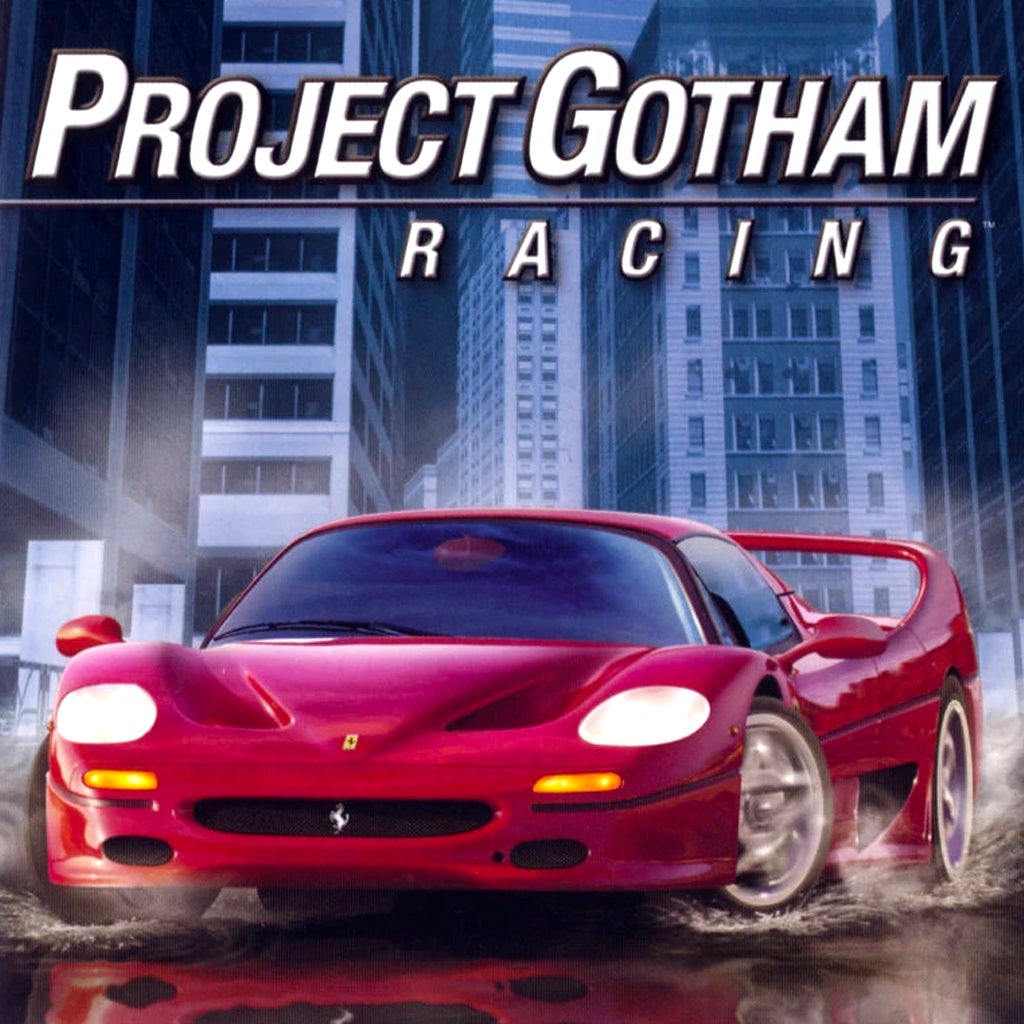
The customary driving game slot, for example, was taken up by Project Gotham Racing. Developed as an Xbox exclusive by Bizarre Creations, the company had prior experience with developing racing games on the PS1 and Dreamcast, with PGR inheriting a lot of its fundamentals from their previous game, Metropolis Street Racer. It was a pretty big success—by 2002, it was only outsold by one rather obvious title, and it laid the groundwork for the Xbox's first flagship racing series.
Perhaps Project Gotham Racing's most immediately recognizable trait is its ability to toe the line between a sim racer and an arcade one. Its graphics and weather conditions are impressive for the time—they more than hold up today—and cars definitely feel like they have more of a weight to them than you might expect in a typical arcade racer. Yet the game's whole presentation is based around stylish driving, and you're fully expected to drift around corners as much as humanly possible.
| Played For | 4h 22m |
|---|---|
| Completion Type | Up To Kudos Lvl 7 |
| Favorite Car | 2000 TVR Tuscan |
What's impressive about PGR is that whether you're playing the game as intended or slicing through apexes and racing lines, both feel equally natural. It's an impressive mixture of styles that doesn't feel like it should work as well as it does, but the game handles beautifully, and navigating the game's many chicanes and street corners feels extra satisfying when the car's movements feel this good.
Progression in PGR is based on a Kudos points system; you get points for completing challenges but also earn them mid-race for fancy driving—drifting, keeping clean sectors, etc. It's probably fair to stop using the word race, actually, as the game has a large variety of "Kudos Challenges" to select from. These involve, in addition to standard races, things like setting certain lap times or overtaking a certain number of cars within a time limit. It's another element of PGR that adds another layer of variety, although it should be said that even with the large amount of game modes on offer, the middle and late game gets pretty grindy.
The Kudos progression ensures that, unless you've acquired one of the game's top cars, many of even the early game challenges will be nigh impossible to gold medal. And even with a top-level car, to consistently reach the highest point totals, the game really expects you to push the handbrake to its limit. Gold medals towards later stages almost require you to drive sub-optimally, and the thrill of pulling off drifts wears off a bit when you're only doing it on straightaways for the points.
But if you're just looking to pass alone, they are rarely all that challenging, so it does get a bit repetitive once you've seen all the modes the game has to offer. This feeling is aided by the relatively small amount of cars available in the game, since a lot of them can be categorized as either slow, medium, or fast, without much else to differentiate them otherwise. The courses here also get pretty repetitive quickly; there are only four cities to choose from, and while their overall roads are fragmented enough times to make them seem unique on paper, even completely separate courses in the same city will feel redundant quickly. It should be noted, though, that the game's radio and soundtrack are location specific, and it's a neat little detail that adds some immersion.
The proper races are probably the game's most straightforward mode, so it's a bit annoying that the AI drivers feel like they are deliberately there to annoy you. They behave erratically, and any contact with them—user-initiated or otherwise—will have you feeling like your matchbox car crashed into a tank. As such, races generally overly rely on overtaking your opponents at the first or second corner.
In spite of a lot of annoyances, though, Project Gotham Racing is likely to remain a thoroughly enjoyable time for the majority of your playthrough. To 100% it would probably be more trouble than it's worth to even the most dedicated fan, but it functions perfectly well as both a game to pull out every so often and knock off a few challenges or as a game to play when you prefer a little more tactility in your split-screen racing experience. When you strip away its grindy point system grinding or questionable AI, Project Gotham Racing is an early example of the simcade genre done (mostly) right.