 Hi, I'm Palipilino!



Nintendo 3DS
1/20/2025
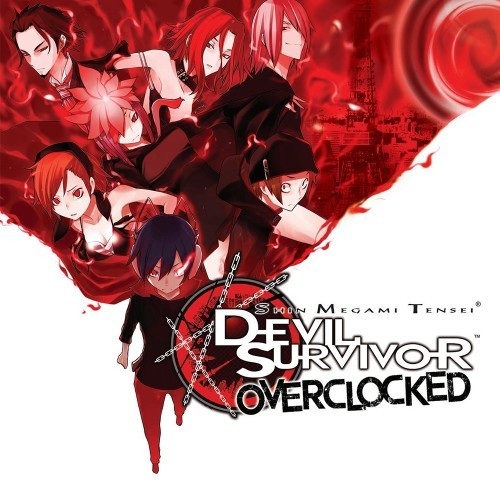
With its frequent history of spinoffs and side games, it's surprising that it took over twenty years for the Shin Megami Tensei franchise to produce a tactical, grid-based RPG for a worldwide audience. It certainly seems like something that would go hand-in-hand with typical SMT turn-based gameplay. In 2009, that idea was recognized with Shin Megami Tensei: Devil Survivor for the Nintendo DS, which was yet another title in the long list of ATLUS-developed titles for Nintendo handhelds.
Devil Survivor represented the continuing trend of the SMT series placing increasing agency in the written narrative at the time of release, and it might even be accurate to say that, based on the amount of time you spend in-game, this game is a visual novel first and tactical RPG second. Focused on the trapped citizens of Tokyo as a demon outbreak forces a citywide lockdown, SMT:DS contains elements of greatness in both its story and gameplay, but not quite consistently enough to live up to some of the series' greats.
Fitting with the comments made in the previous paragraph, it makes sense to begin with a discussion of Devil Survivor's overarching narrative. After all, the game's definitive edition, Overclocked, contains over 20,000 lines of voice-acted dialogue, by far the most in the series at the time. And conceptually, it's certainly intriguing; the game being set inside a lockdown allows for some unique focuses on human psychology that you might not get in a game that takes place mostly in a demon realm. Most of your time will be spent conversing with your fellow lockdowns in a calendar-like system, so you'll have to choose who to prioritize when you have more options than time.
| Played For | 33h 27m |
|---|---|
| Completion Type | Amane, 8th Day |
| Favorite Character | Amane |
| Amane | Amane |
SMT games are well known for their multiple endings, but DS in particular deserves plaudits for the way it never feels like you're being overtly led down a particular path, and your seemingly insignificant choices have a lot more of an impact on the way the story branches in retrospect.
Counterintuitively, by only allowing the player to choose an ending based on the blind actions of their playthrough, Devil Survivor gives the player more agency and delivers the feeling that you really earned the ending you choose. This is especially true as certain characters' survival depends on your ability to manage your schedule and keep up with key events.
Devil Survivor's narrative is more intriguing on paper, though, where its pacing issues and repetitive dialogue are less highlighted. A large degree of exposition comes in the last two days, and depending on your route, it can be a lot to take in all at once. You'll also probably find yourself talking to two different parties in succession about the exact same event or new lore tidbit a non-insignificant number of times; this can make the more dialogue-heavy parts of the game drag quite a bit.
If you were wondering how the tactical RPG elements factor into the gameplay, the answer would be... fine? By all accounts, SMT:DS doesn't do much with its grid-based combat system, and the amount of strategy you'll need to beat a map usually boils down to making sure you attack first. Its demon summoning and fusion mechanics are good as usual, though, and as one of the goals with Devil Survivor was to create a beginner-friendly tactical game, it works as both an introduction to grid-based RPGs and the Megami Tensei series as a whole.
Long, drawn-out enemy encounters are replaced with setting your party up to defeat as many enemies as possible in one hit, and boss battles are foretold long in advance so that you always have plenty of time to prepare. Maps are lacking in both variety and design, but like many great SMT games, the real enjoyment comes from planning your party and winning the fight before it begins. As opposed to the game's plot, combat starts off interesting and engaging but falters towards the end due to the game's general repetitiveness and the likelihood that your party has outgrown the challenging aspect of SMT:DS by the time you're in the endgame.
As with many other ATLUS titles, Devil Survivor would go on to receive a definitive edition a few years later, and Overclocked's additional features are mostly positive, if underwhelming. The Demon Compendium's addition (its omission from the original is shocking in retrospect) and the extra day most endings received are both improvements, as is the inclusion of an Easy mode. The aforementioned voice acting is quantitatively impressive, but its quality is inconsistent at best.
Its soundtrack certainly could have used some love, as only one or two battle themes cover your dozens of encounters. A speed-up button wouldn't have been remiss either; part of what makes later-game combat so repetitive is how long some battles take. Nevertheless, while Devil Survivor could have benefitted from a bit more quality control, it still represents a unique part of SMT's storied history, an overall compelling story, and a simple enough entry point to an iconic series and diverse genre.