 Hi, I'm Palipilino!



Sega Genesis
10/12/2025
It was only a year into the 1990s, but the new decade did not look promising for Sega. Their new 16-bit console, the Genesis, had failed to make an impression on international audiences, and it was vastly outperformed by the aging but familiar NES, even in spite of Sega's improved graphical power. Their 8-bit Master System was a decent success but also a distant second to Nintendo, and if things continued as they started for the Genesis, it wouldn't be a surprise to see it become their last console.
They desperately needed...something. Something to give them mainstream relevance, a leg up on the competition. It began as an internal contest to develop a new mascot for the Sega brand. It resulted in a success that was, without hyperbole, probably beyond the wildest aspirations and dreams of those who worked on it. Sonic the Hedgehog was born.
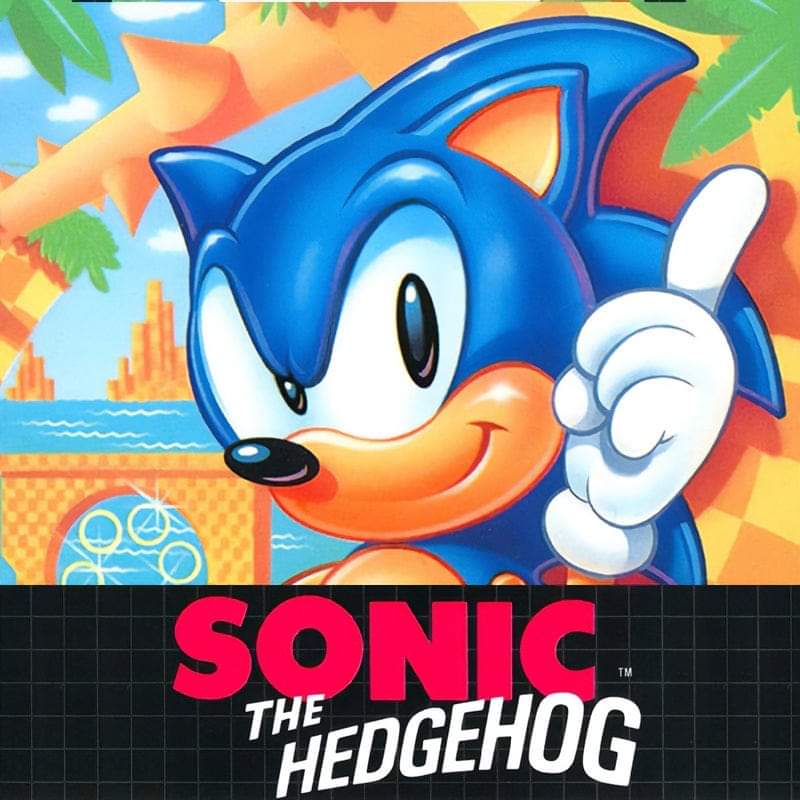
Sonic's marketing campaign was perhaps one of the most impressive and impactful in video game history, and Sega's decision to focus on international audiences while positioning themselves as a more mature console compared to the family-friendly image of the SNES is evident in so much of Sonic's promotional material. This wasn't boring old Mario for little babies! Sonic was cool, cocky, and—most importantly—lightning quick. And if you had any doubt of that, one run through the game's first level would almost certainly be enough to convince you.
| Played For | 4h 21m |
|---|---|
| Completion Type | Good Ending, No Continues |
| Favorite Level | Do you even have to ask? |
| Favorite Non-Green Hill Zone Level | Star Light Zone |
| Fun Fact | My very first Sonic AND Genesis game! |
onic 1's Green Hill Zone is as good of an opening level as a game could hope for. But as the opening to a brand new series? It immediately joined the ranks of the best intro levels ever made. It's a fundamentally fantastic introduction to everything Sonic the Hedgehog was advertised to be. Gorgeous and colorful pixel art, sprawling levels with multiple paths, an impressive amount of verticality for a 2D platformer of its time, and one of the most iconic musical themes of the 4th generation.
Oh, and, of course, the ability to go really, really fast; Sonic's opening zone was rife with opportunities to build up momentum and absolutely fling yourself through the course, and it was accommodating enough that new players would be able to break land speed records after only a few test rounds. Sonic's controls are incredibly simple, allowing players to put as much focus as possible on speed, and novel additions such as curved ramps and loops really helped sell Sonic as a truly next-generation game with a unique coolness appeal.
The only problem with Green Hill Zone is that it eventually ends, and Sonic 1 is fighting an uphill battle for the rest of the game to recapture that magic. (Thankfully, its soundtrack, at least, delivers quality throughout.) There are benefits to putting your best foot forward—many players who grew up with the game and were fans of it will admit to only playing its first few levels. But in truth, there's nothing that can live up to Green Hill for the rest of Sonic 1's runtime. That doesn't mean its levels are all bad; Spring Yard and Star Light Zone are both really fun areas with unique gimmicks and plenty of secrets. Most importantly, they reward exploration and have an impressive scale to them; there always feels like there are new paths to discover in each playthrough.
But present far too often in Sonic 1 is a conflicting philosophy; the game lets you go fast sometimes, sure, and when it does, it feels really good! But even more often, you'll be expected to wait for cycle-based platforming, slow auto-scrolling sections, and just live in a general fear of off-screen hazards. For a game that was so heavily marketed on speed, Sonic 1 sure wants you to spend a lot of time waiting—the irony of Sonic's impatient foot-tap being shown to the player as they wait for platforms to move into place is probably not lost on most players.
And without his signature speed, Sonic's simple platforming becomes a bit mundane. The concept is introduced early, but Labyrinth Zone is where the game really starts to feel like an exercise. (The typical "water level" trappings probably don't help its sluggish pace any, either.) Only about half of Sonic's 18 levels feel like you are playing the game as advertised. The rest are at best generic or at worst an exercise.
That didn't stop Sonic the Hedgehog from practically becoming an overnight sensation, though. Heck, with its fantastic marketing work and its status as the de facto Genesis title from 1991 onward, Sonic probably could have succeeded even if that game wasn't any good. But you don't create a billion-dollar multimedia franchise and cultural icon off the work of marketing alone, and even players who had only experienced its first few levels could probably tell that Sega had created something special. Sonic 1 is a good game, and while its Genesis sequels might have improved upon its quality in the eyes of many...in terms of cultural impact? Of importance to the gaming landscape? Of lasting legacy decades down the line? 1991's Sonic the Hedgehog leaves them in a cloud of dust.