 Hi, I'm Palipilino!



PC
6/28/2025
In the Gravity Falls episode "Little Gift Shop of Horrors," a legendary in-universe stop-motion animator, when asked how his creations are moving on their own, responds with "What? You really believe someone moves these figures one frame at a time? I'm not a masochist! I use black magic!" This is pretty representative of the general public's sentiment towards stop-motion; it's a medium that requires a profound amount of dedication, consideration, and patience—and a medium that most animators are happy to admit that they feel is beyond them. To the layman, it might as well be black magic.
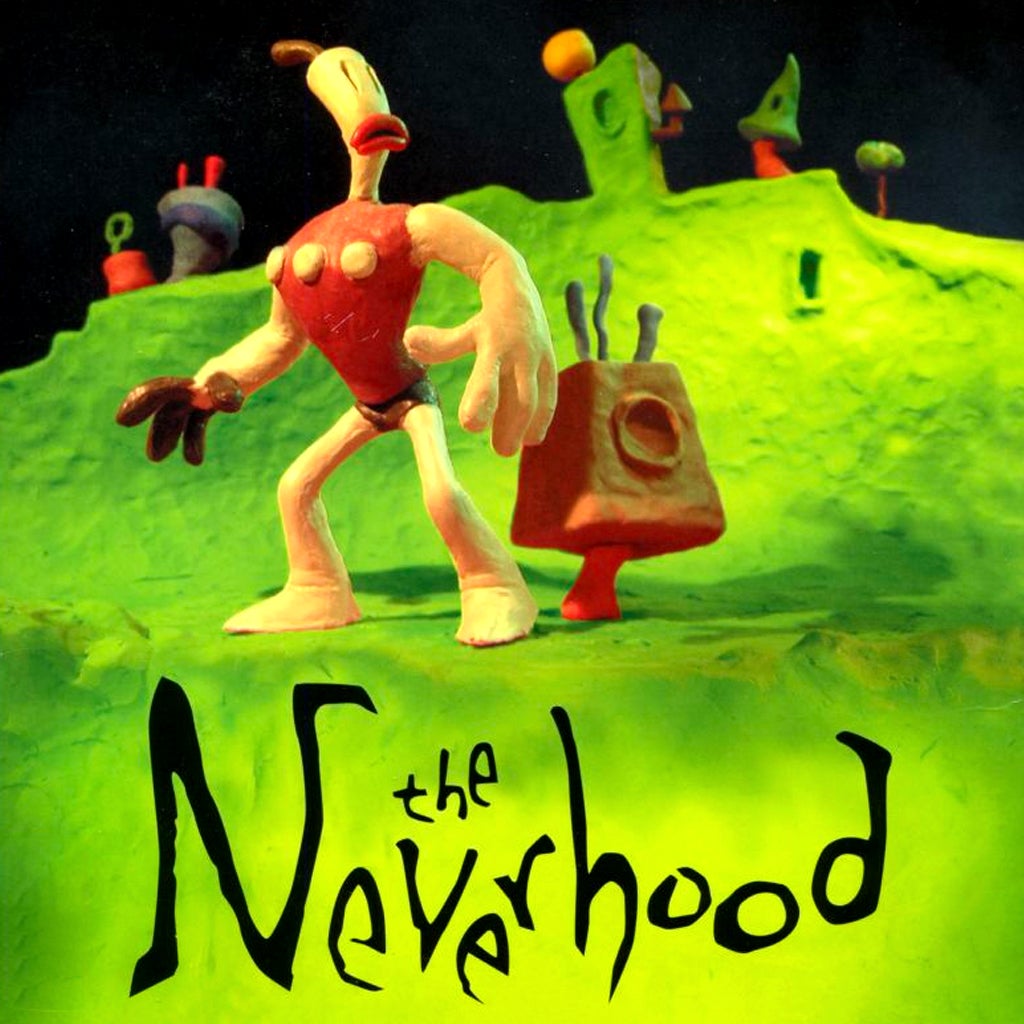
It's one thing to consider the vast amount of planning and execution that goes into a film or episode, where each scene will always play out the same way each time it's viewed. To make a stop-motion video game, though, where the artists are required to account for every background, interaction, and player decision possible...well, there's a reason we don't get a lot of them. So it shouldn't be a surprise that The Neverhood, a 1996 PC adventure game, is still one of the examples brought up most often as an example of one.
The Neverhood utilizes a specific type of stop-motion called claymation, where—you guessed it—everything is made out of clay. And in this case, that really means everything: environments you tread through in both first- and third-person views, a healthy amount of FMV cutscenes, and even the game's user interface are all molded out of clay and contribute to one of the most aesthetically interesting games of its time.
| Played For | 3h 21m |
|---|---|
| Completion Type | Main Game, Saw Both Endings |
| Favorite Hallway | You know the one... |
| Fun Fact | I did a Bill Cipher costume once! |
Of course, if you know anything about The Neverhood, you probably knew that already, but take heart in the knowledge that it's executed very well. There's something still so fascinating about controlling a character that first had to be created in real life, knowing that each of your movements had to be, in this case, quite literally crafted by hand.
Most impressive are the game's cutscenes, which take up a healthy amount of game time but demonstrate some serious passion on the part of the game's developers. With the game's offbeat, surreal nature, it often feels like an old Mystery Science Theater 3000 or sci-fi B-movie, in the best possible way. Its oddball soundtrack is somehow equally off-putting and ferociously earwormy, and you'll be lucky if you can get away from The Neverhood without repeating the phrase "everybody way oh" or "play a little ping pong" in your head.
Discussion about the gameplay has been conspicuously absent so far, and that's because, as mentioned previously, you probably are here for the art style, not the gameplay. What that may imply is that the art style is the most famous aspect of the game—which is also true—but what it really means is that the art is by far and away the best part of the game.
Okay, to its credit, this is a 1990s point & click adventure game, and by those standards, The Neverhood isn't particularly confusing or too reliant on ridiculous logic puzzles in order to progress. In a vacuum, its puzzles are actually relatively reasonable in regard to how difficult it is to understand the solution. The game's problem is then, overwhelmingly, how unenjoyable most of these puzzles are to actually solve. That's because, with barely any exception, the solution to Neverhood's puzzles is to traverse back to another part of the map, look for a clue, and go back to where the puzzle is to input the solution. There isn't so much a test of ingenuity in this game as there is a test of patience—fitting for a game that probably took ages to physically create.
But not fitting for a game whose goal is to provide enjoyment to its players. The Neverhood is so overly reliant on backtracking and randomly located solutions that the sensation of finally solving a puzzle is more akin to relief than satisfaction and is likely to be followed by the thought that "I hope I don't have to go all the way back there again." The poor design is harmed further by the fact that traversal in this game is painfully slow; you might start to even lament Klayman's leisurely walking animation by the conclusion.
The Neverhood is a pretty brief game, but if all you feel like you're doing is walking around and hoping to find your current puzzle's solution on the wall of a cave, then you're going to find it hard to stay engaged. It feels like a game developed by those who wanted to make a revolutionary claymation game but forgot the "game" part until the 11th hour. As such, it remains one of gaming's most fascinating paradoxes. It's a very cool game, but it's not a fun one. It's awesome...but it's not good. The Neverhood delivers a feast for the eyes and ears that impresses even in the current day and does very little else.