 Hi, I'm Palipilino!




Nintendo 3DS
1/13/2026
Perhaps the biggest revelation from Nintendo's 7th generation Wii console—outside of its motion controls—was the introduction of a user-created avatar called the Mii. They played a starring role in the console's pack-in title Wii Sports, of course, but Mii creation became a sort of self-contained experience of its own. It wouldn't be uncommon for a group of friends to spend more time creating their Miis during an afternoon than they would actually playing the game they were created for.
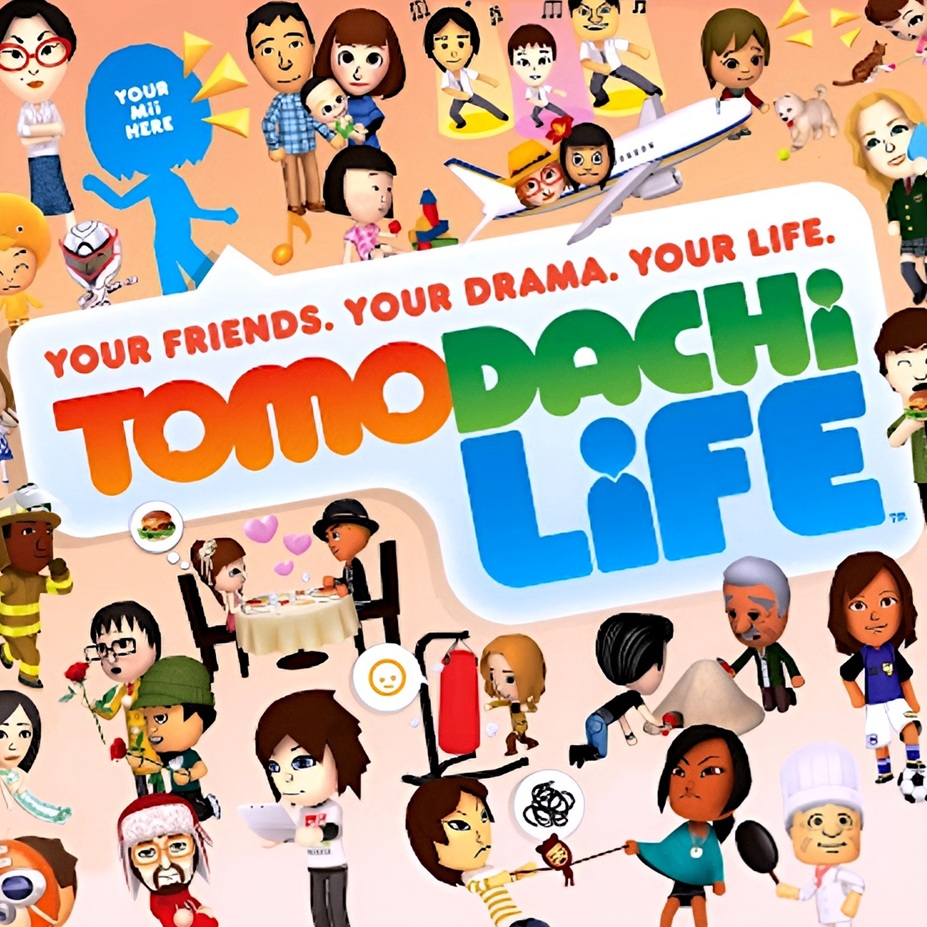
They swiftly became the face of Nintendo between the 7th and 8th generations, and it wouldn't be long before they would be expanded on and featured in a game specifically designed for them. While 2009's Tomodachi Collection was a Japanese exclusive, the worldwide demand for Miis to have a place of their own, where they could live and interact together while being able to act out their little dreams and fantasies, was realized in 2013's Tomodachi Life.
Tomodachi Life is without a doubt one of the 3DS's most unique titles. Unfamiliar players may be tempted to compare it to Animal Crossing given its status as a life sim-like, but it occupies a completely unique space. It is, as you'd expect, predicated on creating or importing a bunch of Miis to live on an island together, and the Wii's MiiMaker already demonstrated the potential for enjoyment that can hold. But here, the real fun starts once the Miis are made.
| Played For | 19h 16m |
|---|---|
| Completion Type | Rolled Credits on Baby, All Island Features Unlocked |
| Favorite Resident | The girl reading this, obviously! You know who you are :3 |
| Fun Fact | They listened to me! Living the dream will be woke af! The gays won!! |
Once they are created, they are basically out of your hands, and you observe their comings and goings like some kind of omnipotent god watching over their fishbowl. The very best thing about it is how passive you end up being for a majority of it, strange as that sounds; you truly do feel like things are happening outside of your control, and that makes everything more interesting. There's nothing quite like witnessing your childhood friend's Mii confess their deep love to a Hatsune Miku Mii with the line, "Marry me or I'll explode you with my mind."
And so ironically, Tomodachi Life—though a strictly single-player game outside of a few wireless-related interactions—becomes a pseudo-social experience. Even the most mundane feels worthy of note. "Hey, did you know your Mii's favorite food is cheesecake? Did you know you're in a pop girl group with Mary Todd Lincoln and Tifa from Final Fantasy VII?" Its absurd, almost Dadaist sense of humor is fantastically appealing and always makes the game feel like it's ready to surprise you in the early stages. Your job as island owner/god is basically to make sure your residents are fed, well-dressed, and entertained, and your interactions with Tomodachi Life—and the game's interactions with itself—make it a tremendously addicting experience for the first dozen hours.
If anything, the ability to experience so much of the game so quickly is what makes its overall quality fall off as quickly as it does. Between the islander requests, the limited minigames, and the small set of routine activities available, Tomodachi Life becomes familiar very quickly. It doesn't take incredibly long for you to feel like you have seen most of what the game has to offer, and at that point, you're logging on more for the hope of seeing something unique instead of the expectation.
Is it still funny to watch a bunch of little guys running around after 15 hours? Yeah, sure, sort of, and there are one or two aspects of the game dedicated to later progression. But on the whole, it's not quite so thrilling the 50th time as it is the 1st. Tomodachi Life thrives on delivering joy through the unexpected, so it shouldn't be a surprise that it can get pretty ho-hum once you mostly know what to expect. It should also be said that, given that this is a social sim game made in the early 2010s by Nintendo, its ideas of gender and romantic relationships are heavily outdated.
Tomodachi Life: Living the Dream, the game's first full-fledged sequel, will release in 2026. It's one of Nintendo's most highly anticipated games, and it doesn't take a lot of thought to understand why. Because the highs of Tomodachi Life are absolutely fantastic: moments you'll be laughing about for weeks and in-universe Mii lore that will put a smile on many a face. And its flaws—and their improvements—are so immediately recognizable. Make more unique mini-games, introduce more variation in activity, give more reasons for daily engagement, and for the love of god, let the Miis be gay.
A sequel is an exciting proposition because fans have been living off the same set of interactions for the past decade now. But even with its limitations, the hype for Living the Dream is a testament to how fundamentally fun Tomodachi Life is. It's one of those games you can easily acknowledge as flawed, while at the same time...c'mon, how can you not like it? It's one of Nintendo's more fascinating modern titles, and you can always tell when a game is a bit special when one of the main complaints against it is just wishing that there was more.